



Type C FIBC big bags
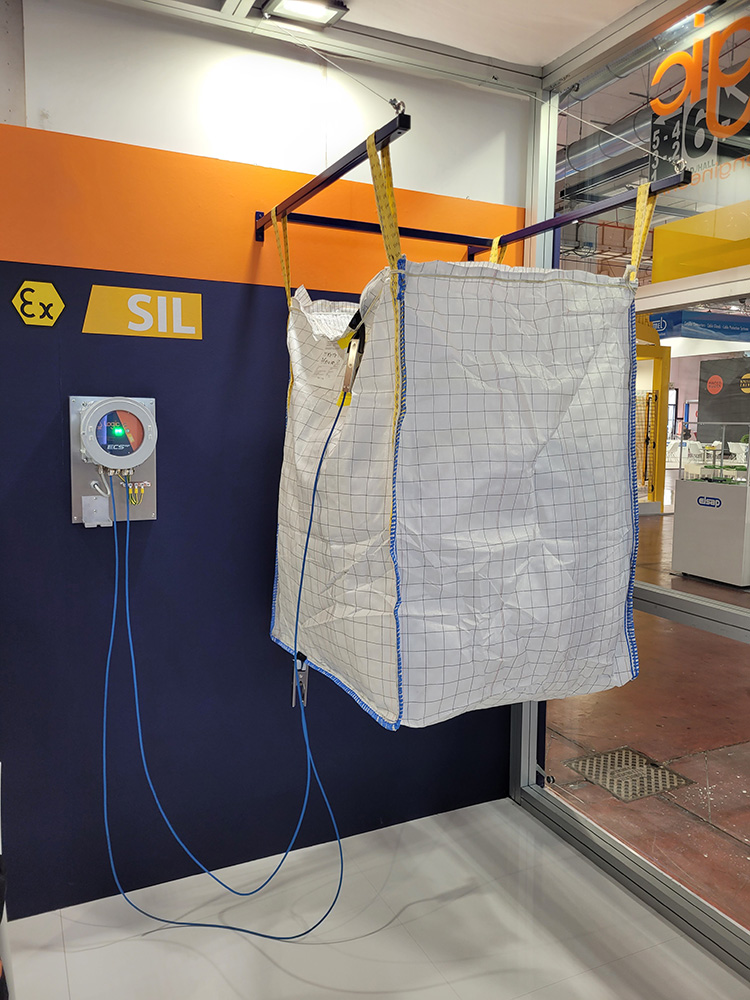
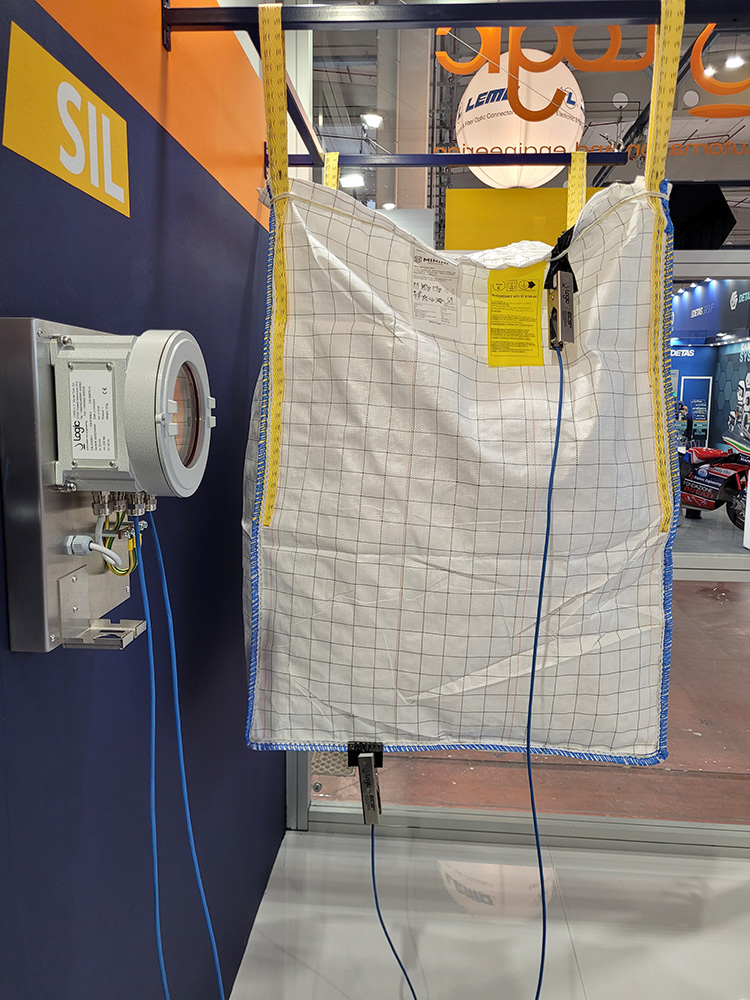
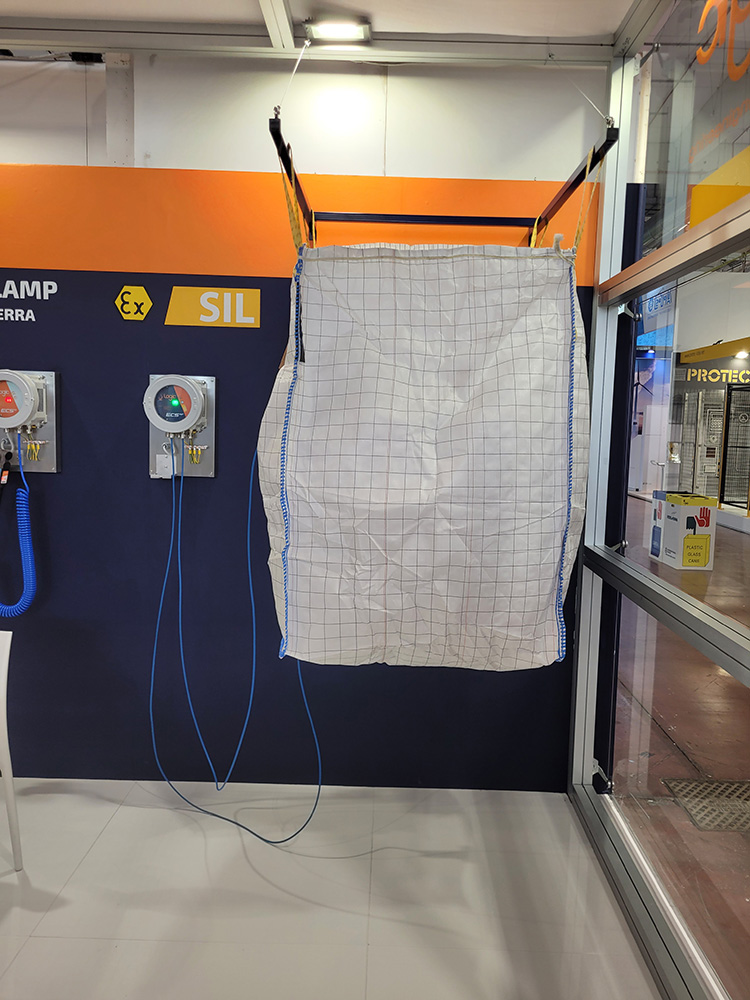
When a big bag is filled or emptied, the flow of powder causes electrostatic charges to build up. Type C FIBCs have an external conductive mesh that creates electrical continuity across the entire surface of the bag. However, the mesh does not dissipate the charges by itself: it collects them and keeps them on the bag. It is the earth connection that dissipates them. This is why a Type C FIBC is only safe if the mesh is intact and earthed throughout the operation. The Logic ECS-RF-FIBC system, with the CLP-FIBC dual clamp, verifies both conditions: it checks that the resistance of the connection falls within a window of 3 kΩ to 10 MΩ and, thanks to the two clamps, also confirms the integrity of the bag’s conductive grid. The monitoring electronics have SIL2 safety integrity level and can be installed in ATEX Zone 1/21, ATEX Zone 2/22 or in an electrical panel in a safe area.
FIBC types: why Type C must be earthed
Big bags are divided into four types according to their electrostatic behaviour (IEC 61340-4-4 classification):
- Type A: no electrostatic protection. Not suitable where flammable dusts or vapours are present.
- Type B: fabric with low breakdown voltage, which limits the most dangerous discharges. Must not be earthed, but is not suitable where flammable dusts or vapours are present.
- Type C: fabric with interwoven conductive threads. Must be earthed during filling and emptying: without earthing, the conductive grid accumulates charges instead of dissipating them and itself becomes a potential source of ignition.
- Type D: antistatic fabric that dissipates charge without the need for an earth connection. Note, however: the antistatic properties of the fabric have a limited lifespan. The bag has an expiry date, beyond which protection is no longer guaranteed, and this must be checked before each use, as required by IEC 61340-4-4.
A Type C bag is therefore only safe if the earth connection is present, effective and maintained throughout the operation.
The hidden risk: a broken grid
Earthing just one tab of a Type C big bag may not be enough to make it safe. If the conductive mesh has been broken, for example through wear, reuse or a manufacturing defect, part of the bag remains isolated. The clamp indicates a correct connection, but that section of fabric continues to accumulate charge.
This is why the Logic system can also be used in a dual-clamp configuration, connecting two points of the bag. This verifies not only the connection to earth, but also the continuity of the conductive grid between the two points.
How the Logic ECS-RF-FIBC system works
The system consists of:
- CLP-FIBC clamps: designed for the most effective connection to the conductive tabs of the big bag
- ECS-RF monitoring unit: SIL2-rated electronics that continuously verify the resistance of the connection throughout filling or emptying
Unlike systems for metal containers, which verify a resistance below 10 Ω, the FIBC system works within a resistance window of 3 kΩ to 10 MΩ, suited to the electrical characteristics of the conductive fabric. If the value falls outside the window, the system stops the process and gives the operator a visual alarm.
The lower threshold of 3 kΩ has been implemented to distinguish a connection through the bag from, for example, direct contact with the metal structure of the station.
The upper threshold of 10 MΩ ensures the integrity of the big bag (with reference to IEC 61340-4-4).
Main technical specifications
Feature | Details |
Resistance window | 3 kΩ – 10 MΩ |
Verification | Earth connection and integrity of the conductive grid |
Configuration | CLP-FIBC dual clamp |
Safety integrity level | SIL2 – IEC 61508 |
Monitoring unit installation |
|
Action in the event of a fault | Process stop and operator alarm |
Power supply | 230 Vac or 24 Vdc |
Temperature range | Unit in safe area: -20 °C ≤ Tamb ≤ +70 °C Unit in ATEX Zone 1/21: -20 °C ≤ Tamb ≤ +40 °C |
Certifications
- ATEX: 2014/34/EU [BVI 17 ATEX 0007 X]
- Safety Integrity Level: SIL2 – IEC 61508
Available accessories
- CAB-ECS-6C1.0: extension cable from the electronics inside the panel to the local junction box, suitable for intrinsically safe “Ex i” circuits
- JBL: junction box with green and red LEDs, to show the connection status close to the filling or discharge station when the electronics are installed in a safe area
- SP5 / SP10: 5 or 10 metre coiled cables, for a more flexible clamp connection
- ECS-MULTI: electrical panel for installing several monitoring systems in a multipoint
Why choose Logic
Big bag discharge stations are often where powders enter a process plant. Logic designs turnkey plants for the chemical, pharmaceutical and cosmetics industries and knows these critical points from the inside. The ECS-RF-FIBC system was created to answer a precise question: not just “is the bag connected?”, but also “is the bag intact?”. The dual clamp answers both.
Frequently asked questions (FAQ)
- Is a Type C big bag safe without earthing?
No. A Type C FIBC that is not earthed is dangerous, because the conductive grid accumulates charge and can release it as a spark. - What is the difference between a Type C and a Type D FIBC?
A Type C bag dissipates charge through its conductive threads when it is earthed. A Type D bag is made of antistatic fabric and can dissipate charges without an earth connection, but its antistatic properties have a limited lifespan: the bag has an expiry date, beyond which protection is no longer guaranteed, and this must be checked before each use as required by IEC 61340-4-4. - Why are two clamps needed?
With one clamp, you verify the connection between the tab and earth. With two clamps, you also verify the continuity of the conductive grid between two points of the bag, detecting any breaks in the mesh. - Why is the threshold in kΩ and MΩ rather than 10 Ω as for metal containers?
Because the conductive fabric of an FIBC has a much higher resistance than a metal container. The system uses a range of values suited to this material. - Can Type C big bags be reused?
It depends on the bag manufacturer’s instructions. Reuse increases the risk of damaged conductive threads, which is exactly the situation that the dual-clamp integrity check can detect.